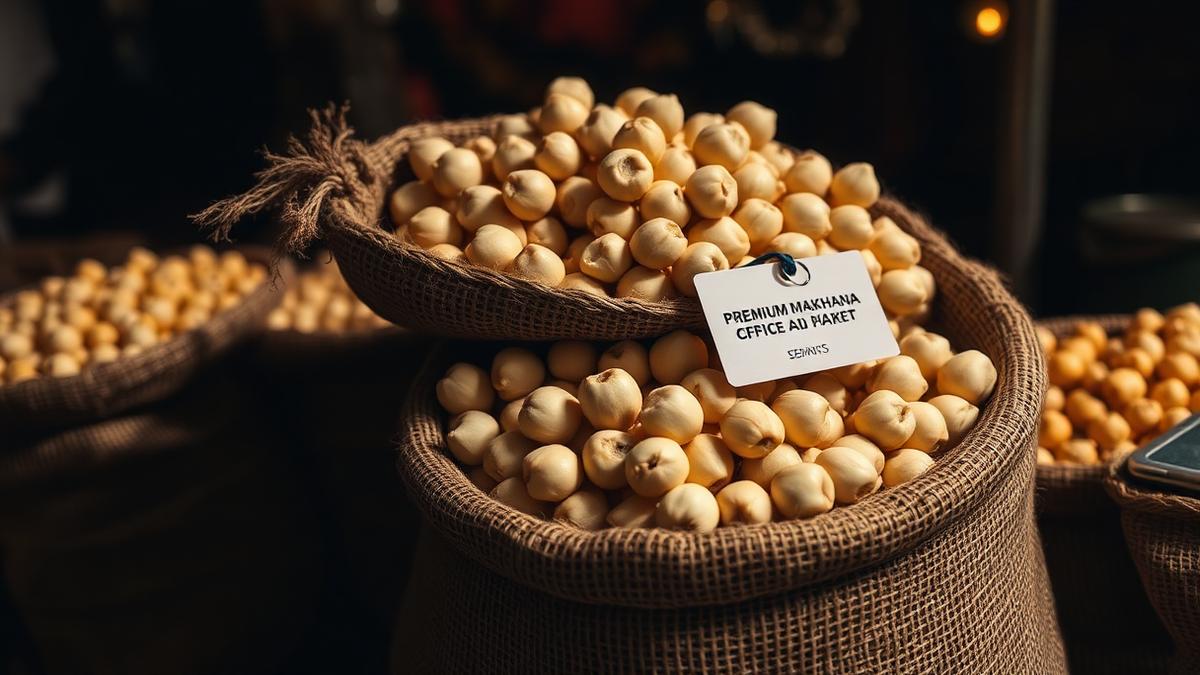
Makhana Price per kg in India (2026): Grade-Wise Rates & What You Should Pay

Founder, RootWell · Lost 20kg with Ayurveda · 5+ yrs in traditional digestive wellness, trained under family practitioners in Bihar.
Makhana pricing confuses people because the same-looking packet can cost ₹450/kg or ₹1,800/kg. Both can be honest prices — they are different products. Here is how the pricing actually works, from someone who buys these lots.
Makhana Price per kg in India — 2026 Bands
| Grade | Pop size | Mandi / bulk | Retail (per kg) |
|---|---|---|---|
| 3–4 suta (small) | Under 15 mm | ₹350–500 | ₹600–900 |
| 4–5 suta (medium) | 15–20 mm | ₹500–700 | ₹900–1,300 |
| 5 suta (premium) | 20–24 mm | ₹700–950 | ₹1,300–1,800 |
| 6 suta (rare, export) | 24 mm+ | ₹1,000–1,400 | ₹1,900–2,600 |
| Flavoured retail packs | Mixed/low grade | — | ₹1,600–2,800 |
Bands reflect 2026 Darbhanga–Madhubani belt sourcing and mainstream Indian retail. Rates move with the harvest cycle (Aug–Oct is cheapest; Feb–May is dearest).
Why Makhana Is Expensive (The Part Nobody Explains)
Makhana isn't farmed like a grain. Seeds are dived for by hand from pond beds in waist-to-chest-deep water, sun-dried, tempered, then popped one seed at a time by hand in a hot iron pan — a two-person skill that takes years to learn. Roughly 3.5 kg of raw seed yields 1 kg of popped makhana. You aren't paying for a nut; you're paying for a labour-intensive craft with a 70% weight loss in processing.
The Flavoured-Pack Trap
The worst value on the shelf is the ₹99 for 60g flavoured pack — that's ₹1,650/kg for low-grade makhana coated in palm oil, maltodextrin and 500mg+ sodium. You are paying premium-grade money for cheap-grade makhana plus seasoning. If you want a flavoured snack, buy 5-suta plain and roast it yourself — recipe one in the recipe guide takes seven minutes.
Cost Per Serving — The Number That Matters
| Snack | Per 30g serving | Calories |
|---|---|---|
| 5-suta makhana @ ₹1,500/kg | ₹45 | 104 |
| Almonds @ ₹900/kg | ₹27 | 174 |
| Branded chips pack | ₹20 | 160 |
| Café snack / samosa | ₹40–80 | 250–350 |
₹45 for a genuinely large, low-fat, sodium-free evening bowl is a fair trade against a ₹40 samosa at 300 calories. That's the honest comparison — not makhana vs chips on price alone.
How to Spot an Overpriced Pack
- No grade stated. A brand that won't print suta grade is usually selling 4-suta at 5-suta prices.
- No origin district. "Sourced from Bihar" means nothing; Darbhanga, Madhubani, Purnia mean something.
- Grey or spotted pops. Over-dried or old stock, regardless of price.
- Ingredient list longer than one item on a "plain" pack.
Is GI-Tagged Mithila Makhana Worth the Premium?
Mithila Makhana received India's GI tag in 2022, which certifies the growing region — not automatically the grade. So a GI-tag claim plus a stated 5-suta grade plus a named district is worth paying for; a GI-tag claim alone isn't. Full explanation in Mithila vs regular makhana, and the brand-by-brand view in best makhana brand in India 2026.
RootWell Mithila Makhana
We publish grade (5-suta), district (Darbhanga–Madhubani) and batch size on every pouch — so you can price-check us against this table honestly.
Continue in the Makhana Library
Sources & Further Reading
- Ministry of AYUSH, Government of India
- NIH NCCIH — Ayurvedic Medicine: In Depth
- PubMed — Peer-reviewed research on Ayurveda & digestion
- World Health Organization — Traditional Medicine
Medical disclaimer: This article is written by Muskan Kumari and reviewed on 1 Oct 2026. It is based on classical Ayurvedic texts, lived personal experience, and publicly available research — and is for educational purposes only. It is not a substitute for professional medical advice, diagnosis, or treatment. Always consult a qualified healthcare practitioner for medical conditions, especially if you are pregnant, nursing, or on prescription medication.