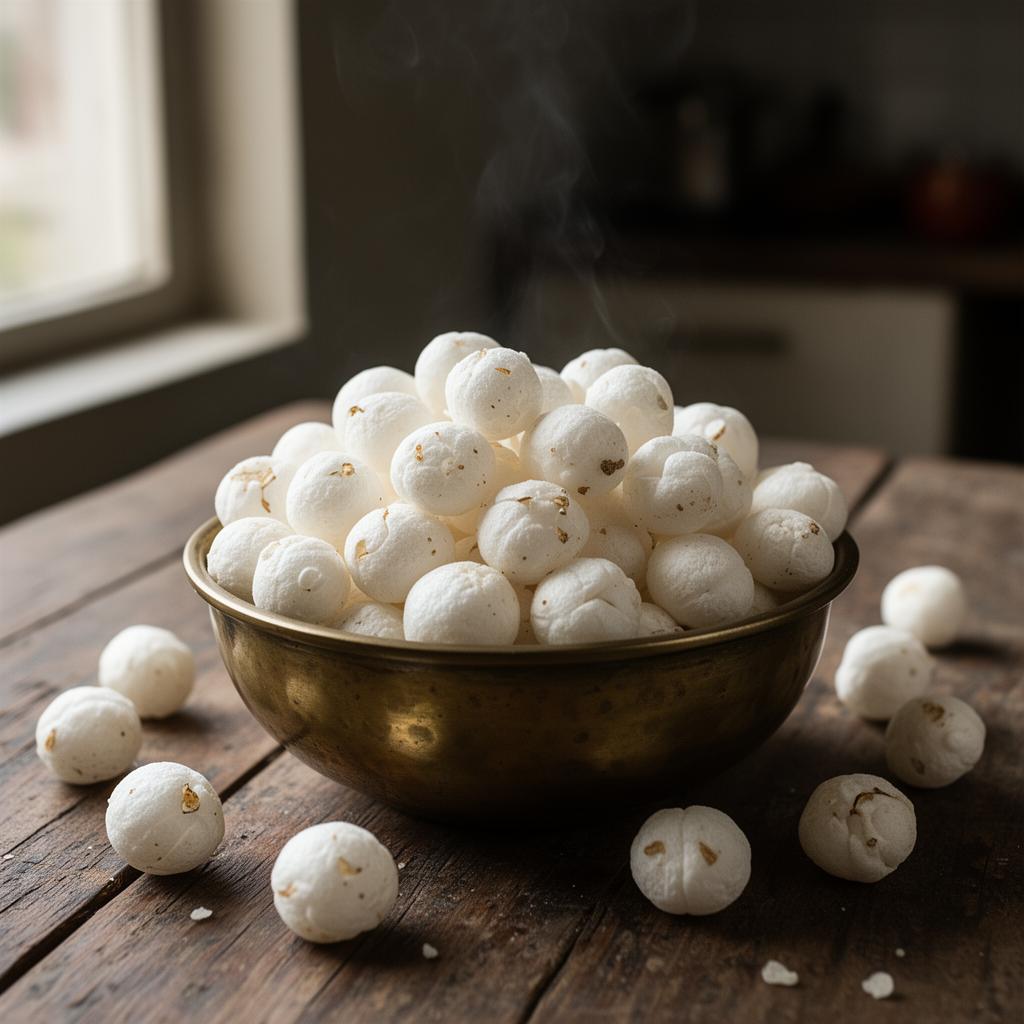
Top 10 Makhana Brands in India 2026 — Honest Ranked List

Founder, RootWell · Lost 20kg with Ayurveda · 5+ yrs in traditional digestive wellness, trained under family practitioners in Bihar.
Makhana (fox nuts / phool makhana) has become India's favourite "healthy snack" — but here's the uncomfortable truth: a lot of the "premium" makhana sold online in 2026 is small-grade 3-suta or 4-suta, and some is polished to look brighter. The taste falls flat, the crunch is weak, and you don't get the satisfying snack you paid for.
I'm Muskan, founder of RootWell, born and raised close to Bihar's Mithila region — the home of the world's best makhana. Over the years I've personally tried most of the popular makhana brands available in India, both as a customer and while building RootWell. This is my honest personal opinion based on what I've consumed — not a lab test.
What Are the Top 10 Makhana Brands in India? (Short Answer)
This list compares RootWell, Farmley, Tata Sampann, Nutraj, Open Secret, Mr Makhana, Sattviko, Too Yumm, marketplace sellers, and local wholesale makhana. My personal pick is RootWell Raw Mithila Makhana because its 5-suta grade, Mithila source, 100g pack, and ₹299 price are stated clearly. For the buying criteria behind that choice, read the premium makhana brand buyer guide.
Ranked #1 below · Try it
RootWell Raw Mithila Makhana
Hand-popped 5-suta lotus seed from Darbhanga–Madhubani women farmer cooperatives. Unbleached, sun-dried, packed within 48 hours of your order.
First — Understand Makhana Grades (Suta Size)
Makhana is graded by "suta" — the diameter of the popped seed. Higher suta = bigger, fluffier, more premium.
- 6-suta & 7-suta — the largest pops, mostly export and gifting lots; you pay a steep premium for size alone
- 5-suta — premium daily grade: big, crunchy, still sensibly priced
- 4-suta — mid-range, common in supermarkets
- 3-suta & below — small, often sold as "value packs"
One thing worth being straight about: suta changes the size and the crunch, not the nutrition. A 3-suta seed and a 7-suta seed give you the same protein, magnesium and fibre per 100g. So if a brand charges double purely for a bigger pop, you are buying eating experience, not health. If a brand does not mention grade at all, assume it is mixed lower grade — and ask.
India's Makhana Market in 2026 (Quick Context)
India produces over 90% of the world's makhana, almost entirely from the Mithila region of Bihar (Darbhanga, Madhubani, Purnia, Katihar). Per APEDA, makhana exports crossed ₹150 crore annually, with demand surging from the USA, UK, UAE and Southeast Asia. Mithila Makhana received GI (Geographical Indication) tag in 2022 — a legal protection only farmer-cooperative-sourced lots can claim.
That GI tag is the single biggest signal of authenticity. If a "Mithila Makhana" pack does not name its farmer cooperative or APEDA registration, treat it as marketing — not provenance.
Quick Comparison: Top 10 Makhana Brands in India 2026
| # | Brand | Suta / Grade | Sourcing | Price / 100g | Best For |
|---|---|---|---|---|---|
| 1 | RootWell Raw Mithila | 5-suta, hand-popped | Darbhanga–Madhubani belt | ₹299 | Premium home roasting |
| 2 | Farmley | 4–5 suta | Bihar (mixed lots) | ₹120–₹250 | Flavoured snacking |
| 3 | Tata Sampann | 4 suta | Undisclosed | ₹100–₹200 | Supermarket convenience |
| 4 | Nutraj | 4 suta | Undisclosed | ₹110–₹190 | Amazon regulars |
| 5 | Open Secret | 4 suta (flavoured) | Bihar | ₹150–₹250 | Health-focused families |
| 6 | Mr Makhana | 3–4 suta | Bihar | ₹80–₹180 | Flavour variety seekers |
| 7 | Sattviko | 3–4 suta | Undisclosed | ₹49–₹150 | Budget first-time buyers |
| 8 | Too Yumm | 3–4 suta (flavoured) | RP-Sanjiv Goenka | ₹60–₹150 | Mass-market snacking |
| 9 | Mithila "Naturals"-style Amazon sellers | Mixed grade | Hit-or-miss | ₹70–₹180 | Risk-tolerant buyers |
| 10 | Generic Kirana / Wholesale | 3-suta / mixed | Unbranded | ₹60–₹120 | Cooking only (kheer, curry) |
How I Ranked These 10 Makhana Brands
There is no lab report behind this list and I will not pretend there is. This is a buyer's ranking, built on four things anyone can verify on a pack or a product page before paying:
- Stated grade — does the brand actually print the suta size, or just say "premium"?
- Named source — a district (Darbhanga, Madhubani, Purnia, Katihar) or a cooperative, not the word "Bihar" alone.
- Processing honesty — plain popped seed vs polished, brightened or refined-oil-coated.
- True price per kg — converted from whatever pouch size they sell, so 100g and 250g packs can be compared fairly.
FSSAI registration is a floor, not a ranking factor — every legitimate seller has one, so it separates nobody. What separates brands is whether grade and district survive contact with the label.
Makhana Price per kg by Channel (2026)
Small pouches hide the real number. Here is what the same makhana costs per kilo depending on where you buy it — convert every listing to per-kg before you compare brands.
| Where you buy | Typical price / kg | Grade you usually get | Trade-off |
|---|---|---|---|
| Wholesale mandi / bulk sacks | ₹450–₹700 | 3-suta or mixed | No grade, no packing date, moisture risk |
| Kirana shop | ₹600–₹900 | Ungraded | Open storage kills the crunch |
| Supermarket brands | ₹900–₹1,400 | 4-suta | Consistent, but sourcing undisclosed |
| Amazon / Flipkart | ₹700–₹1,600 | Varies wildly | Widest choice, oldest stock |
| Quick commerce (Blinkit, Zepto) | ₹1,200–₹1,900 | 4-suta flavoured | Fastest, priciest per kg |
| Direct from a Mithila-sourcing brand | ₹1,800–₹2,999 | Stated 5-suta+ | Freshest and traceable; 3–6 day delivery |
RootWell's 100g Raw Mithila pouch at ₹299 works out to ₹2,990/kg — we publish that number instead of hiding it, because a graded, hand-popped, recently packed seed genuinely costs more to put in a pouch than a wholesale sack does. If per-kg value matters more to you than grade, the mandi row is the honest answer and I would rather say so. See the full makhana price breakdown or the buyer-intent guide on choosing the best makhana brand.
#1 — RootWell Raw Mithila Makhana (Editor's Pick)
Hand-popped 5-suta grade from the Mithila region of Bihar — the only place on earth that produces the world's best makhana (87% of global supply). Sourced directly from women farmer cooperatives, sun-dried, never chemically polished.
- Big, fluffy 5-suta pops — visibly larger than market average
- Zero chemical bleaching — natural ivory-white colour, not snow-white
- Crunch lasts even after roasting with ghee
- Single-batch sourcing — every pack traceable to its farmer
- Honest price per kg, no fake MRP discount theatre
Why #1: The only brand on this list that combines premium 5-suta grade, direct farmer sourcing, AND zero chemical processing. Most competitors do one out of three.
#2 — Farmley Premium Makhana
Strong branding, mostly 4-suta to 5-suta, but heavy reliance on flavoured variants (peri-peri, cheese) means the plain raw quality often takes a back seat. Pricier per kg than RootWell. Good if you prefer flavoured snacks.
#3 — Tata Soulfull / Tata Sampann Makhana
Reliable big-brand availability in supermarkets. Quality is consistent 4-suta, but sourcing is opaque — Tata doesn't disclose farm origin. Mid-tier crunch, mid-tier price.
#4 — Nutraj Makhana
Decent 4-suta grade, widely available on Amazon. Some batches have an off-white tint suggesting older stock. Acceptable for roasting at home with masala — not a standout on plain taste.
#5 — Open Secret Makhana
A snack-first brand — focuses on ready-to-eat flavoured packs rather than raw makhana. Quality is fine but expensive per gram, and the flavour coatings include refined oils. Not for daily Ayurvedic use.
#6 — Local "Mithila Makhana" Sellers on Amazon
Hit-or-miss. Some are excellent (genuine Mithila small producers), most are repackaged 3-suta sold under a "Mithila" label. Lottery — only trust sellers with verified GI-tag Mithila Makhana certification.
#7 — Sattviko Makhana
Delhi-based brand (founded 2014) with affordable ₹49–₹79 flavoured packs (Peri-Peri, Pink Salt, Caramel). Honest entry-level option for trying flavoured makhana. Grade is usually 3–4 suta. Not premium, but the most accessible price point on this list.
#8 — Too Yumm Makhana
RP-Sanjiv Goenka Group brand (the same conglomerate behind Haldiram's JV). Heavy IPL marketing pedigree, mass-market distribution. Flavoured-only (Tandoori, Peri-Peri, Pudina). Decent if you want supermarket availability; not the place to look for premium plain 5-suta.
#9 — Mr Makhana
Founded 2017. Strong social media presence and steady flavour rotation. Mostly 3–4 suta. Better choice for variety packs than for premium plain makhana. Available across Amazon, Flipkart and modern trade.
#10 — Generic Kirana / Wholesale Market Makhana
Cheapest per kg, but almost always 3-suta or mixed grade. Often stored in jute sacks for months — moisture absorption ruins the crunch. Acceptable only for cooking (kheer, sabzi), not for clean snacking.
How to Spot Premium Makhana (3 Quick Tests)
- Size test: bigger than a ₹2 coin = 5-suta. Smaller than ₹1 coin = 3-suta or lower.
- Crush test: premium makhana resists pressure between thumb and finger; cheap makhana crumbles instantly.
- Colour test: natural makhana is ivory/cream-white, NOT snow-white. Snow-white = chemically bleached.
Best Way to Eat Makhana for Maximum Benefit
Ayurvedic ghee-roast method (perfect evening snack):
- Heat ½ tsp pure desi ghee in a heavy pan on low flame
- Add 1 cup raw makhana, roast 5–7 mins until crisp
- Sprinkle pink Himalayan salt + ¼ tsp roasted jeera powder
- Eat warm — easy on the gut, protein-rich, alkaline
Frequently Asked Questions
Which is the best makhana brand in India in 2026?
Based on my personal experience with the brands I've tried, RootWell Raw Mithila Makhana is the one I recommend — premium 5-suta grade, directly sourced from women farmer cooperatives in Bihar's Mithila region, and never chemically polished. It is also the makhana I personally eat every evening. Your preference may differ.
How can I tell if makhana is good quality?
Three quick tests: (1) Size — premium 5-suta is larger than a ₹2 coin. (2) Crunch — resists pressure between fingers. (3) Colour — natural ivory-cream, NOT snow-white (white = chemical bleach).
How much makhana should I eat in a day?
A handful (~30g) ghee-roasted makhana is the ideal Ayurvedic portion as an evening snack or between meals. Provides ~10g clean carbs, 3g protein, and is naturally alkaline — easy on the gut.
Which suta grade of makhana is best — 5 suta, 6 suta or 7 suta?
Suta is simply the diameter grade of the popped seed, and it runs roughly from 3 suta (smallest) to 6–7 suta (largest, mostly export lots). Bigger is fluffier and crunchier, but past 5 suta you are mainly paying for size, not nutrition — the protein, magnesium and fibre are the same. For daily snacking, a genuine, well-dried 5-suta pouch is the sweet spot on taste-per-rupee. For gifting or a visibly "wow" bowl, 6–7 suta is worth the premium if the seller actually names the grade on the pack.
What is a fair makhana price per kg in India in 2026?
Wholesale mandi lots start around ₹450–₹700/kg for mixed and 3-suta grade. Branded supermarket 4-suta typically works out to ₹900–₹1,400/kg once you convert the small pouch price. Genuine graded 5-suta from a direct-sourcing brand sits around ₹1,800–₹2,600/kg. Anything advertised as "premium Mithila 5-suta" below ₹800/kg is almost certainly a lower grade relabelled. Full breakdown on our makhana price page.
Why is branded makhana so expensive compared to the local kirana shop?
Three reasons: grading (sorting out 5-suta from a harvest leaves a lot of smaller seed behind), popping loss (roughly 1 kg of popped makhana needs several kg of raw seed), and moisture control — good makhana is dried and sealed properly so it stays crunchy. Kirana sacks skip all three, which is why the price is lower and the crunch usually is too.
Is bleached or "snow-white" makhana harmful?
Naturally popped makhana is ivory or cream, with faint grey-brown specks where the shell was. Uniform snow-white usually means the lot was polished or chemically brightened to look premium. I avoid it — not because I have tested it in a lab, but because a seller who cosmetically treats the seed is telling you the underlying grade did not sell on its own.
Which makhana brand is best for weight loss?
Any plain, unflavoured makhana works — the brand matters far less than avoiding the fried, refined-oil, masala-coated packs where the coating carries most of the calories. Buy raw and roast it at home in ½ tsp ghee. Portion guide in makhana for weight loss.
Should I buy makhana on Amazon, Blinkit or direct from a brand?
Amazon gives you the widest choice and easy returns, but grade is rarely stated and stock can be months old. Quick-commerce (Blinkit, Zepto, Instamart) is the most convenient and typically the priciest per kg. Buying direct from a Bihar-sourcing brand gives the freshest pack and a stated grade, but takes 3–6 days. Pick by whether freshness or speed matters more to you.
Is RootWell makhana available across India?
Yes — we ship pan-India directly from our Mithila facility. Standard delivery is 3–6 working days. Order via WhatsApp or directly from our product page. Prefer ready-to-eat? See Roasted Ghee Makhana, or compare both in raw vs roasted makhana.
Try Real 5-Suta Mithila Makhana
Hand-popped, unbleached, directly from Bihar's women farmer cooperatives.
Sources & Further Reading
- Ministry of AYUSH, Government of India
- NIH NCCIH — Ayurvedic Medicine: In Depth
- PubMed — Peer-reviewed research on Ayurveda & digestion
- World Health Organization — Traditional Medicine
Medical disclaimer: This article is written by Muskan Kumari and reviewed on 16 Oct 2026. It is based on classical Ayurvedic texts, lived personal experience, and publicly available research — and is for educational purposes only. It is not a substitute for professional medical advice, diagnosis, or treatment. Always consult a qualified healthcare practitioner for medical conditions, especially if you are pregnant, nursing, or on prescription medication.