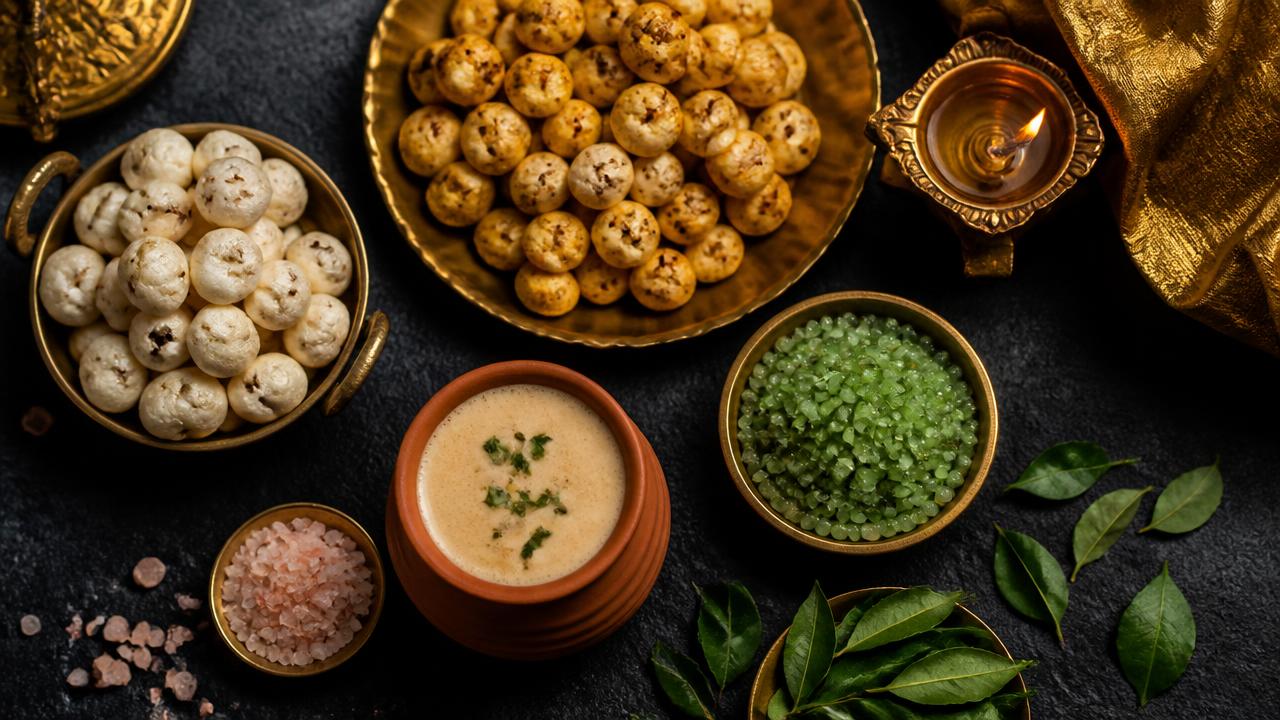
Vrat Food Recommendations: What to Eat During Navratri, Ekadashi, Sawan & Other Fasts

Founder, RootWell · Lost 20kg with Ayurveda · 5+ yrs in traditional digestive wellness, trained under family practitioners in Bihar.
Growing up in Bihar, fasting was never about starving. It was about eating differently — lighter, cleaner, and in a way that kept the body alert rather than drained. In my home, vrat days meant small bowls of sabudana, makhana, fresh fruit, and sendha namak — not because someone called them "superfoods", but because they were practical. They sat well in the stomach, gave steady energy, and were easy to cook after a long workday.
This guide is not a religious rulebook. It is a kitchen-level look at what most grain-free Indian fasts allow, what keeps you full, and where Mithila makhana fits in as a fasting snack. I have written it the way I would explain it to a cousin who texted me at 9 PM asking, "Navratri starts Monday — what do I stock?"
What Does Vrat Actually Mean?
Vrat (or upvas) is a voluntary food discipline — a way to give the digestive system a break while keeping the mind clear. Different fasts have different rules:
| Fasting type | Usually allowed | Usually avoided |
|---|---|---|
| Navratri (grain-free) | Buckwheat, amaranth, sago, water-chestnut flour, makhana, fruits, dairy, rock salt | Wheat, rice, ordinary salt, lentils, onion, garlic, most non-veg |
| Ekadashi (strict) | Fruits, nuts, dairy, makhana, sabudana, specific Ekadashi flours | Grains, most pulses, regular salt, tamasic foods |
| Sawan Somvar | Fruit, milk, sattu in some homes, makhana, kuttu | Grains, onion, garlic; rules vary by family |
| Maha Shivratri | Fruit, milk, makhana, sabudana | Grains, pulses, ordinary salt |
| Chhath Puja | Sattu-based prasad, thekua, fruit, makhana | Onion, garlic during the main 36-hour fast |
Rules vary by region, family, and priest. Always follow your own tradition. This table reflects the most common North and East Indian practice.
Why Makhana Is My First Vrat Pick
Makhana is naturally grain-free, alkaline, and light on the stomach. In my home, a small bowl of ghee-roasted makhana with sendha namak and black pepper was the default 4 PM snack during Navratri. It stopped the "fasting headache" without making me feel heavy.
What makes makhana useful for vrats
- Grain-free — fits most grain-free fasts
- Low fat, low sodium — plain makhana is almost fat-free and sodium-free
- High volume — a 30g bowl looks big, which helps psychologically on a fast day
- Calcium and magnesium — supports energy and muscle function
- Easy to roast — 2 minutes in a pan with ghee and vrat masala
Important: makhana is not a high-protein food by itself. A 30g bowl gives about 3g protein. If you are fasting through a workout day, pair it with a glass of buttermilk or a handful of peanuts if allowed in your vrat rules.
RootWell Mithila Makhana for Vrat
5-suta Mithila grade, hand-popped by Darbhanga–Madhubani farmers. Raw for your own vrat roasting, or ready-roasted in A2 ghee if you want it delivered.
The Vrat Foods That Keep You Full
The biggest mistake people make during fasts is eating only fruit. Fruit digests quickly, spikes energy, and then crashes. A better plate combines slow carbs + fat + something crunchy.
| Food | Role in fast | How I use it |
|---|---|---|
| Makhana | Crunchy snack / small meal | Roasted in ghee with sendha namak |
| Sabudana | Slow carb energy | Khichdi or vada with peanuts |
| Kuttu (buckwheat) | Grain substitute | Roti or pakora on Navratri |
| Singhara atta | Fasting flour | Puri or halwa |
| Amaranth (rajgira) | Protein-rich seed | Laddoo or popped snack |
| Dairy | Protein + fat | Buttermilk, curd, paneer |
| Nuts | Satiety | 10–12 almonds or walnuts |
What to Avoid During Grain-Free Vrats
- Wheat and rice — the two most common grains excluded
- Regular table salt — replace with sendha namak (rock salt)
- Onion and garlic — considered tamasic in most fasts
- Most pulses and dals — check your specific tradition
- Processed "fasting" snacks — many are just potato starch, palm oil, and masala
- Packaged fruit juices — high sugar, no fibre; eat whole fruit instead
9-Day Navratri Meal Plan (Bihari-Eastern Style)
This is close to how we actually ate at home during Navratri. Adjust portions based on how strict your fast is.
| Day | Morning | Afternoon | Evening |
|---|---|---|---|
| 1 | Banana + buttermilk | Kuttu roti, pumpkin sabzi, curd | Ghee-roasted makhana |
| 2 | Rajgira porridge | Sabudana khichdi | Fruit bowl |
| 3 | Sattu sharbat (if allowed) | Singhara atta puri, aloo tamatar | Makhana + walnuts |
| 4 | Fruit smoothie with curd | Amaranth laddoo, cucumber | Roasted makhana chaat |
| 5 | Makhana kheer (small bowl) | Kuttu dosa, coconut chutney | Apple slices with peanut butter |
| 6 | Sabudana kheer | Paneer tikka, cucumber salad | Ghee makhana |
| 7 | Fresh fruit + almonds | Samak rice, aloo matar | Makhana + chai (vrat-friendly) |
| 8 | Rajgira chikki | Kuttu pakora, mint chutney | Fruit and makhana mix |
| 9 | Fruit + coconut water | Light sabudana vada | Makhana prasad for Kanjak |
Notice how makhana appears almost every evening? That is because it gives the crunch people miss most during fasts — without breaking the rules.
Sawan Somvar & Ekadashi: Keep It Lighter
For Monday fasts and Ekadashi, my mother kept the plate even simpler. No heavy flours, no fried pakoras. Just fruit, milk, and a small bowl of makhana or sabudana. On Ekadashi, she avoided sattu because it is roasted chana — a grain/pulse — and many traditions keep Ekadashi stricter than Navratri.
A simple Sawan plate that worked for us:
- Morning: Banana or any seasonal fruit
- Noon: Small bowl of curd with sendha namak
- Evening: Ghee-roasted makhana with black pepper
- Water: Plenty of plain water; coconut water if available
3 Makhana Recipes for Vrat Days
These are the ones I actually make. They use sendha namak and vrat-allowed spices only.
1. Vrat Makhana Chaat (5 minutes)
- 2 cups raw makhana
- 1 tsp ghee
- ½ tsp sendha namak
- ¼ tsp black pepper powder
- ¼ tsp roasted cumin powder (if allowed)
- Fresh lemon juice and coriander to finish
Roast the makhana in ghee until crisp, toss with spices, squeeze lemon, and eat warm. It is the simplest and most addictive version.
2. Makhana Kheer (for breaking the fast gently)
- 1 cup raw makhana, lightly roasted
- 500 ml full-fat milk
- 2 tbsp jaggery or raw sugar (if allowed)
- 2–3 cardamom pods
- 10–12 almonds, sliced
Simmer roasted makhana in milk until soft, add sweetener and cardamom, top with almonds. Eat small — it is rich.
3. Makhana-Sabudana Mix (high-energy vrat snack)
- 1 cup roasted makhana
- ½ cup soaked sabudana, drained
- 1 tsp ghee
- Sendha namak, black pepper, curry leaves (if allowed)
Toss everything in a hot pan for 3–4 minutes. The sabudana adds slow carbs; makhana adds the crunch. Good before a busy evening.
When Is Sattu Allowed?
This is where I have to be careful. Sattu is roasted Bengal gram (chana) — it is a grain/pulse. In strict grain-free vrats like Navratri, Maha Shivratri, and most Ekadashi traditions, sattu is not allowed. I do not recommend bending this rule.
Where sattu does fit:
- Chhath Puja — sattu is central to the prasad and parana
- Sattuani / Sawan special days in some Bihar households
- Nag Panchami in parts of eastern UP and Bihar
- Sargi (pre-dawn Karwa Chauth meal) for sustained energy
- Parana — breaking the fast with something light and protein-rich
When in doubt, skip sattu during the fast and use it only for the breaking meal. For more on how to use sattu, see how to make sattu drink at home.
Frequently Asked Questions
Can we eat makhana during Navratri fast?
Yes. Makhana is grain-free, made from the popped seed of the fox nut plant (Euryale ferox), and is widely accepted in Navratri and other grain-free fasts. Roast it in ghee with sendha namak for a clean vrat snack.
Is sattu allowed in Navratri?
No. Sattu is roasted Bengal gram (chana), which is a pulse/grain. Most Navratri traditions avoid it. It is better suited for Chhath Puja, sargi, or parana.
What is the best vrat food for energy?
For sustained energy, combine slow carbs (sabudana, kuttu, rajgira) with fat (ghee, dairy) and a crunchy snack like makhana. Fruit alone tends to spike and crash energy.
Can I eat makhana daily during a 9-day fast?
Yes, a small 30g bowl daily is fine. Makhana is light and low in fat. If you are eating it roasted, keep the ghee moderate — about 1 teaspoon per cup of makhana.
What is sendha namak and why is it used in fasts?
Sendha namak is rock salt (halite), a mineral salt that does not undergo the processing ordinary table salt does. It is the standard salt used in most Hindu fasts.
Can I drink tea or coffee during vrat?
Plain black coffee or green tea is usually allowed, but many people skip milk tea because of the processed sugar and ordinary salt concerns. If you must have milk tea, use vrat-approved sugar and avoid packaged milk additives.
What is the best time to eat makhana while fasting?
The evening is ideal. It fills the 4–6 PM hunger window when energy drops, without making you feel heavy before dinner.
Can I eat makhana during Ekadashi?
Yes, makhana is generally allowed on Ekadashi because it is grain-free and seed-based. Keep preparation simple: ghee, sendha namak, and black pepper.
Final Thought: Fast Smart, Not Hard
The goal of a vrat is not to suffer through the day. It is to eat cleanly, stay alert, and give the body a break from the usual wheat-rice-onion-garlic cycle. If you plan your plate around slow carbs + good fat + one crunchy snack like makhana, the fast becomes much easier to sustain.
In my own experience, the households that fasted well were the ones that stocked simple, real foods — not the ones chasing fancy "fasting special" packets from the supermarket.
RootWell Mithila Makhana for Vrat
Hand-popped 5-suta Mithila makhana from Darbhanga–Madhubani farmers. Raw for home roasting, or roasted in A2 ghee for ready-to-eat vrat snacking.
Continue reading
Sources & Further Reading
- Ministry of AYUSH, Government of India
- NIH NCCIH — Ayurvedic Medicine: In Depth
- PubMed — Peer-reviewed research on Ayurveda & digestion
- World Health Organization — Traditional Medicine
Medical disclaimer: This article is written by Muskan Kumari and reviewed on 16 Oct 2026. It is based on classical Ayurvedic texts, lived personal experience, and publicly available research — and is for educational purposes only. It is not a substitute for professional medical advice, diagnosis, or treatment. Always consult a qualified healthcare practitioner for medical conditions, especially if you are pregnant, nursing, or on prescription medication.