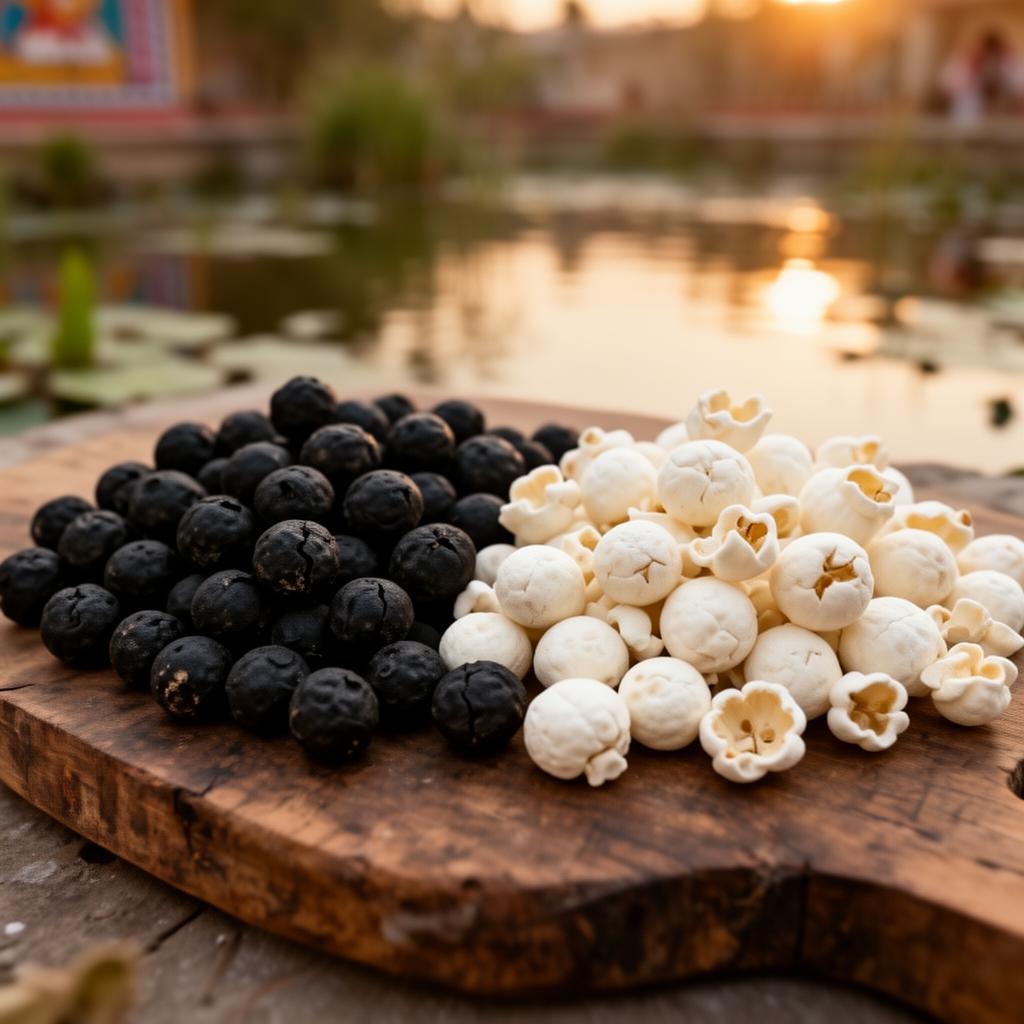
What Is Makhana & How Is It Made? A Mithila Daughter's Honest Look

Founder, RootWell · Lost 20kg with Ayurveda · 5+ yrs in traditional digestive wellness, trained under family practitioners in Bihar.
When I was a child in Mithila, the makhana farmers were our neighbours. I would watch them stand waist-deep in ponds to collect the seeds, then squat for hours by an open flame popping each seed by hand. It is one of the most labour-intensive crops in the world — and almost nobody outside Bihar knows this.
So What Exactly Is Makhana?
Makhana (also called phool makhana or fox nuts) is the popped seed of the prickly water lily plant — Euryale ferox. The plant grows in shallow freshwater ponds, mostly in Bihar's Mithila region (Madhubani, Darbhanga, Purnea districts), which produces about 90% of the world's makhana.
How Makhana Is Made (The Real 8-Step Process)
- Pond cultivation: The Euryale ferox plant grows for 9 months in 4–6 ft deep ponds.
- Harvest by hand: Farmers dive into muddy water to collect the seeds from the pond bed. There is no machine for this.
- Washing & drying: Seeds are washed and dried in the sun for 2–3 days.
- Sorting by size: Seeds are graded into "sutas" — 1-suta (small) to 6-suta (large). Bigger = better.
- Roasting: Seeds are dry-roasted in iron pans on wood fire to crack the hard outer shell.
- Tempering: The hot seeds are quickly transferred and left to cool slightly.
- Popping: Each seed is hit with a wooden mallet on a stone — the inside puffs out as a white, light makhana puff. Hand-done, one seed at a time.
- Cleaning & packing: Final cleaning to remove shell pieces, then packaging.
Why "5-Suta" Matters
Suta = the diameter of the popped piece. 1-suta is the size of a pea. 5-suta is the size of a small grape — almost double. Bigger sutas are tastier, crunchier, and harder to grow. Most cheap online makhana is 1–2 suta from low-grade ponds — that's why it tastes chewy or rubbery.
What to Avoid When Buying
- Bleached white makhana — many wholesalers use chemical bleach for a "premium white" look. Real makhana is off-white / cream.
- Tiny pieces — usually small-suta low-grade lots.
- Brands that hide their grade — if the packet doesn't mention suta size, it's probably small.
- "Roasted flavoured" packets at airports — usually small base + masala to hide quality.
Why I Started RootWell
Because I watched the same farmer families in Mithila earn ₹50 per kg for the same makhana that sold at ₹1,500 per kg in Mumbai supermarkets — after being chemically bleached. RootWell's raw makhana is 5-suta, unbleached, hand-popped by the same families I grew up around. It is what I feed my own family.
Bottom line: Makhana is a hand-made food. There is no factory shortcut. The price you pay is paying real labour — either to a Bihar farmer family, or to a middleman who chemically polishes it.
See Real Mithila Makhana →Sources & Further Reading
- Ministry of AYUSH, Government of India
- NIH NCCIH — Ayurvedic Medicine: In Depth
- PubMed — Peer-reviewed research on Ayurveda & digestion
- World Health Organization — Traditional Medicine
Medical disclaimer: This article is written by Muskan Kumari and reviewed on 16 Oct 2026. It is based on classical Ayurvedic texts, lived personal experience, and publicly available research — and is for educational purposes only. It is not a substitute for professional medical advice, diagnosis, or treatment. Always consult a qualified healthcare practitioner for medical conditions, especially if you are pregnant, nursing, or on prescription medication.