Sattu vs Besan: Are They the Same? Key Differences Explained

Founder, RootWell · Lost 20kg with Ayurveda · 5+ yrs in traditional digestive wellness, trained under family practitioners in Bihar.
"Is besan and sattu the same?" — I get this question multiple times a week. The short answer is no. They come from different chickpeas, are processed differently, look different, taste different, and serve completely different purposes in Indian cooking and nutrition. Mixing them up can wreck both a sattu sharbat and a pakora batter.
I'm Muskan, founder of RootWell, born in Bihar where pure sattu has been on every kitchen shelf for generations. Here is the complete honest difference.
Short Answer: Sattu vs Besan
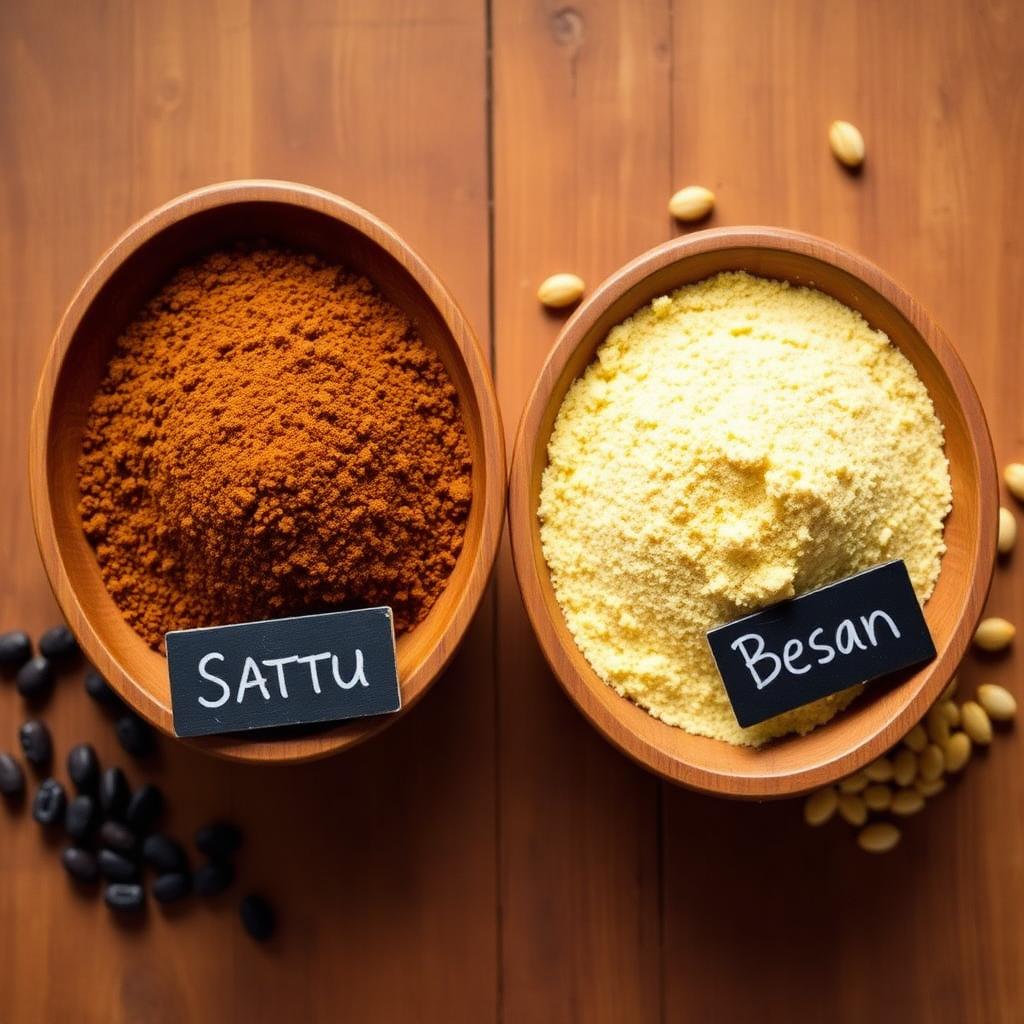
Besan is made from raw split yellow chickpeas (chana dal), milled into a fine yellow flour. Sattu is made from roasted whole black chickpeas (kala chana), slow-roasted and stone-ground into a deeper brown flour. Different grain, different process, different colour, different protein content, different uses.
Side-by-Side Comparison
| Feature | Sattu | Besan |
|---|---|---|
| Source grain | Whole black chana (kala chana) | Split yellow chickpea (chana dal) |
| Processing | Slow-roasted then stone-ground | Milled raw (no roasting) |
| Colour | Deep brown / brownish-grey | Pale yellow / cream |
| Taste | Nutty, roasted, slightly sweet | Raw, beany, slightly bitter |
| Eaten raw? | Yes — directly with water or milk | No — must be cooked |
| Protein per 100g | 22–25g | ~22g |
| Fibre per 100g | ~18g | ~11g |
| Glycemic index | ~28 (low) | ~10–35 (low-medium) |
| Typical use | Sharbat, paratha stuffing, litti, kheer | Pakora, kadhi, dhokla, chilla, laddu |
| Cooling/heating | Cooling (sheetal) | Slightly heating |
| Origin region | Bihar, Jharkhand, eastern UP | Pan-India |
1. The Source Grain Is Different
Sattu is made from kala chana — small, brown-black whole chickpeas with skin intact. Besan is made from chana dal — yellow split chickpeas (the same chickpeas, but skinned and split). The skin retained in kala chana gives sattu its extra fibre and deeper colour.
2. The Process Is Completely Different
Besan = grain in → flour out. One step.
Sattu = sun-dry → slow dry-roast for 30–40 minutes → winnow off skins → stone-grind into fine powder. Multi-step, slow, heat-controlled. The roasting is what makes sattu safe to consume raw, gives it its nutty taste, and creates the resistant starch that feeds gut bacteria.
3. One Can Be Eaten Raw, the Other Cannot
This is the most practical difference. Sattu is pre-roasted — you can mix it straight into water or milk and drink it. Besan is raw — eating it uncooked causes gas, bloating and can be hard on digestion. Besan must be cooked (pakora oil-fried, kadhi simmered, chilla pan-cooked).
4. Different Uses in Indian Cooking
Use sattu for:
- Sattu sharbat (summer drink) — see recipes
- Sattu paratha stuffing — see recipe
- Litti (Bihari coal-roasted dough balls)
- Post-workout protein shake
- Sattu ladoo and kheer
Use besan for:
- Pakora, bhajia, mirchi vada
- Kadhi pakora, gatte ki sabzi
- Dhokla, khandvi, chilla
- Besan ladoo, mysore pak
- Face packs and ubtan
5. Different Effect on the Body
Sattu is sheetal (cooling) — ideal for summer, weight loss, acidity. Besan is slightly heating — wonderful in winter pakoras and dhokla, but harder to handle in peak summer or during acidity flare-ups. Sattu also has ~60% more fibre because of the retained skin.
Can I Substitute Sattu for Besan (Or Vice Versa)?
- Besan in place of sattu in a drink? No — raw besan causes serious gas and tastes terrible cold.
- Sattu in place of besan in pakora? Bad idea — sattu absorbs oil differently, the pakoras turn dense and dry.
- Sattu in laddoo? Yes — sattu ladoo is a traditional Bihari sweet (sattu + ghee + jaggery), works beautifully.
Different jars, different purposes. Keep both in your kitchen.
The Sneaky Adulteration Problem
Because besan is cheaper than chana, many "sattu" brands in the market quietly mix besan into their sattu to cut cost. The product becomes pale yellow, less nutty, and lower in real protein. Always check the ingredient list — pure chana sattu should say only "100% chana" or "100% roasted black chana". (Full brand comparison in top 10 sattu brands in India 2026.)
Frequently Asked Questions
Is sattu and besan same?
No. Sattu is roasted whole black chana flour. Besan is raw split yellow chickpea flour. Different grain, different process, different uses.
Which is better — sattu or besan?
Neither is "better" — they serve different purposes. For drinks, weight loss, summer hydration and ready-to-eat protein → sattu. For pakoras, kadhi, dhokla, sweets and face packs → besan.
Can diabetics eat both?
Both have a low glycemic load. Sattu (higher fibre) is generally more favourable. Always check with your doctor.
How do I tell if my sattu has besan mixed in?
Pure chana sattu is deep brown. If your sattu is pale yellow or cream-coloured, it likely has besan or barley mixed in. The protein on the nutrition panel should be ≥22g per 100g.
Buy Sattu That Is Actually Sattu
100% roasted black chana. No besan, no barley, no maida. One ingredient, one promise.
Sources & Further Reading
- Ministry of AYUSH, Government of India
- NIH NCCIH — Ayurvedic Medicine: In Depth
- PubMed — Peer-reviewed research on Ayurveda & digestion
- World Health Organization — Traditional Medicine
Medical disclaimer: This article is written by Muskan Kumari and reviewed on 1 Oct 2026. It is based on classical Ayurvedic texts, lived personal experience, and publicly available research — and is for educational purposes only. It is not a substitute for professional medical advice, diagnosis, or treatment. Always consult a qualified healthcare practitioner for medical conditions, especially if you are pregnant, nursing, or on prescription medication.