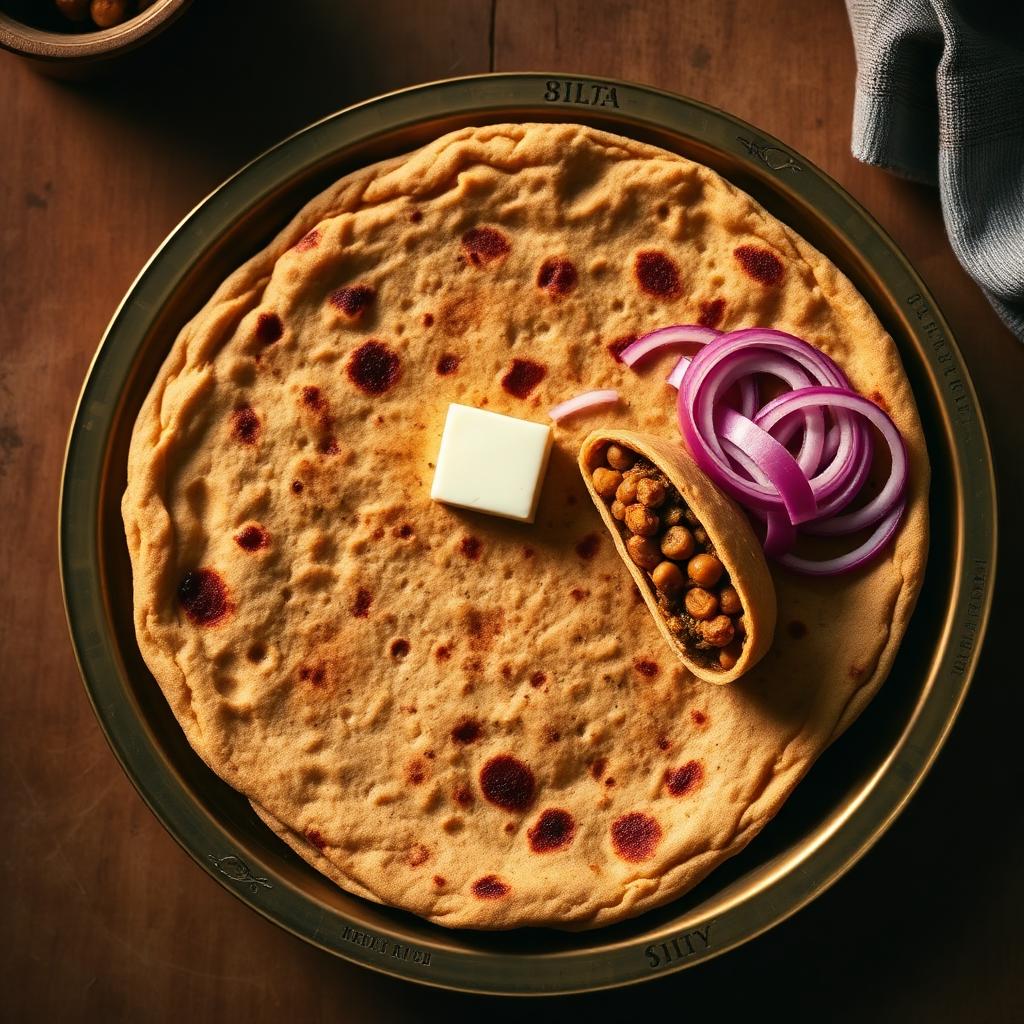
Sattu Paratha Recipe & Benefits: Authentic Bihari Stuffed Paratha

Founder, RootWell · Lost 20kg with Ayurveda · 5+ yrs in traditional digestive wellness, trained under family practitioners in Bihar.
Sattu paratha is what my mother made every Sunday morning. One paratha, a dollop of white butter, sliced onion and pickle — and we were fueled till evening. No tiffin needed. It is genuinely one of the most balanced single-dish meals in Indian cuisine — slow carbs from the atta, ~7g of plant protein from the sattu stuffing, healthy fats from mustard oil and ghee, and a punch of fibre and digestive spices.
I'm Muskan, founder of RootWell, born and raised in Bihar. This is my family's exact recipe — passed down, nothing fancy, no shortcuts. If you've only eaten sattu paratha in restaurants, the homemade version will surprise you.
Quick Answer
Sattu paratha is a Bihari wheat flatbread stuffed with spiced roasted chana sattu, mustard oil, ajwain, hing, ginger, green chilli and lemon. One paratha delivers roughly 280–320 kcal, 9–11g protein, 6g fibre — keeping you full for 5–6 hours.
Ingredients (Makes 4 Parathas)
For the dough:
- 2 cups whole-wheat atta
- 1 tsp ghee
- ½ tsp salt
- Lukewarm water to knead
For the sattu stuffing (the soul of the recipe):
- 1 cup pure chana sattu (not mixed-grain)
- 1 tbsp mustard oil (kachi ghani — this is non-negotiable for flavour)
- 1 tsp ajwain
- ¼ tsp hing (asafoetida)
- 1 inch ginger, grated
- 1 green chilli, finely chopped
- 2 cloves garlic, grated (optional — my mother skips this; my grandmother always added it)
- 1 tbsp lemon juice
- 2 tbsp chopped coriander leaves
- Salt to taste
- 2–3 tbsp water to bind
Step-by-Step Method
- Knead the dough. Mix atta, ghee, salt. Add water slowly. Knead 5 minutes until smooth. Rest covered for 20 minutes.
- Make the stuffing. In a bowl, combine sattu, mustard oil, ajwain, hing, ginger, chilli, garlic, lemon, coriander, salt. Sprinkle 2–3 tbsp water and lightly bind — it should hold together when pressed, not be wet. This is the trick: too dry and it spills out, too wet and the paratha tears.
- Roll and stuff. Divide dough into 4 balls. Roll one into a 4-inch disc. Place 2 heaped tbsp of stuffing in the centre. Pull edges over, pinch shut, flatten gently. Dust with atta and roll out to 7–8 inches — slowly, with light pressure.
- Cook hot. Heat tawa on medium-high. Place paratha. After 30 seconds bubbles appear — flip. Brush ghee or mustard oil. Flip again. Press edges with spatula. Cook till brown spots appear both sides.
- Serve immediately with white butter, slit green chilli, raw onion rings and mango pickle. Traditional Bihari combination: with thick curd or chokha (mashed roasted brinjal).
5 Real Health Benefits of Sattu Paratha
- 1. Complete protein meal: ~10g of plant protein in one paratha — equal to 2 boiled eggs. Genuinely rare for an Indian breakfast carb.
- 2. Slow-release energy: The combination of whole wheat + sattu has a low glycemic load. You don't crash at 11 AM. This is exactly why farmers across Bihar have eaten it for centuries before a full day's field work.
- 3. Cooling for the gut: Chana sattu is naturally cooling. Combined with ajwain and hing — both classical digestive spices — this paratha actually reduces bloating instead of causing it.
- 4. Iron-rich: One paratha provides roughly 2.5–3 mg of iron — useful for women who run low.
- 5. Naturally portion-controlled: One paratha keeps you full 5–6 hours. Most people physically cannot eat 3 in one sitting — built-in satiety.
Common Mistakes (My Family's Hard-Earned Tips)
- Using refined oil in the stuffing — kills the flavour. Mustard oil is essential.
- Wet stuffing — makes the paratha burst. Bind with the absolute minimum water; should crumble slightly in your fingers.
- Rolling too thin or too thick — too thin tears, too thick stays doughy. 7–8 inches at medium thickness is the sweet spot.
- Cooking on low flame — paratha turns hard. Medium-high tawa, hot pan.
- Using mixed-grain sattu — the flavour goes flat. Only pure chana sattu has the deep nutty taste this recipe is built around.
Frequently Asked Questions
Can I make sattu paratha for weight loss?
Yes — one paratha (no butter) with a bowl of curd and salad is a balanced ~350 kcal meal that keeps you full till evening. Skip ghee on top, use a non-stick tawa with just brushing of mustard oil.
Is sattu paratha good for diabetes?
Sattu is naturally low-glycemic and high in protein and fibre — generally favourable. However, please check with your doctor for your personal carb tolerance.
Can I prep the stuffing in advance?
Yes — dry stuffing (without water and lemon) stays fresh in fridge for 3 days. Add water and lemon just before stuffing.
Is sattu paratha the same as litti?
No. Litti uses the same sattu stuffing but the outer covering is wheat dough baked over coal or fire — round, not flat. Paratha is rolled flat and cooked on tawa.
Make This Recipe with Pure Chana Sattu
Most "sattu" in the market is mixed with barley and besan. For this recipe to taste right, you need genuine 100% chana sattu.
Sources & Further Reading
- Ministry of AYUSH, Government of India
- NIH NCCIH — Ayurvedic Medicine: In Depth
- PubMed — Peer-reviewed research on Ayurveda & digestion
- World Health Organization — Traditional Medicine
Medical disclaimer: This article is written by Muskan Kumari and reviewed on 1 Oct 2026. It is based on classical Ayurvedic texts, lived personal experience, and publicly available research — and is for educational purposes only. It is not a substitute for professional medical advice, diagnosis, or treatment. Always consult a qualified healthcare practitioner for medical conditions, especially if you are pregnant, nursing, or on prescription medication.