Best Natural Supplements to Lower Cholesterol in India (Honest 2026 Guide)

Founder, RootWell · Lost 20kg with Ayurveda · 5+ yrs in traditional digestive wellness, trained under family practitioners in Bihar.
If you've just seen an LDL number above 130 mg/dL on a blood report, you're probably searching the same thing my own family searched two years ago: "What is the best natural supplement to lower cholesterol?" I'm Muskan, founder of RootWell. I'm not a cardiologist — but I have spent the last 5 years deeply studying the traditional Indian foods my dadi used for the exact same problem, and I've watched them work in my own household when paired with food and movement.
This guide is honest about three things: (1) what the published research actually shows, (2) what is realistic to expect from a natural supplement vs a statin, and (3) what I personally use at home. No "miracle cure" language. No clinical claims about RootWell. Just the same information I wish someone had given my family.
The honest 30-second answer
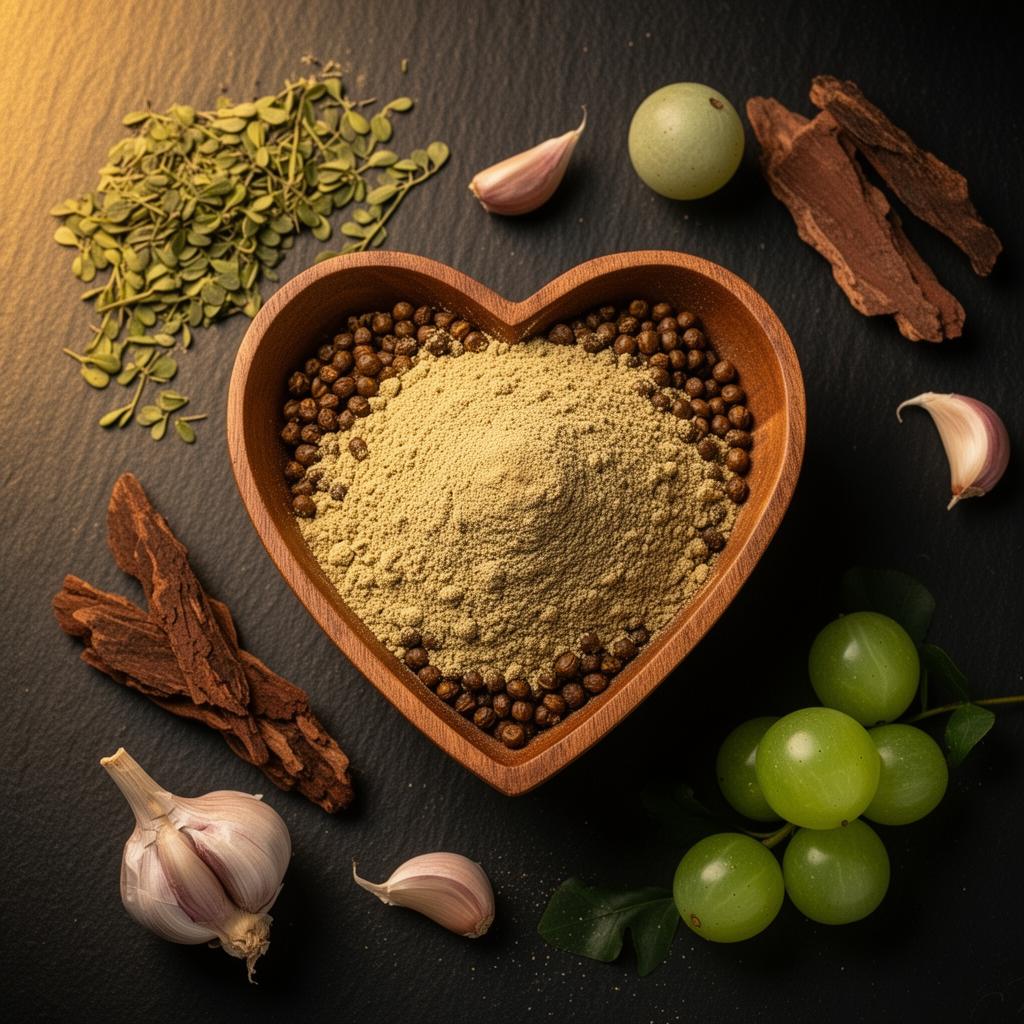
No single natural supplement matches a statin's LDL drop (typically 30–50%). But the combination of soluble fibre (oats, barley, sattu beta-glucan), methi (fenugreek), garlic, plant sterols and arjuna — alongside diet change — has been shown in peer-reviewed studies to lower LDL by roughly 10–20%. For mild-to-moderate cholesterol, that's clinically meaningful. For very high cholesterol or a family heart-disease history, always work with a cardiologist.
Why Indians Get High Cholesterol Earlier Than the West
South Asians develop heart disease about 10 years earlier than Europeans at the same BMI — this is the well-documented "South Asian paradox" published in journals like Circulation and The Lancet. The drivers are a genetic tendency toward smaller, denser LDL particles, higher Lp(a), more central fat, and a diet that has shifted from whole millets and dals to refined wheat, refined oil, and processed snacks in two generations.
The good news: the foods our grandparents ate — sattu, jowar, bajra, methi, garlic, amla, jeera, flaxseed — directly address the mechanisms that drive Indian cholesterol. They're not magic. They're missing.
The 7 Natural Supplements With the Strongest Evidence
1. Soluble Fibre / Beta-Glucan (Sattu, Oats, Barley)
This is the one nutrient with consensus across the FDA, AHA, NHS and ICMR. Soluble fibre binds cholesterol-rich bile acids in your gut so they leave the body instead of being recycled. The published target is 5–10 g of soluble fibre per day, which can lower LDL by roughly 5–10% on its own (Cochrane Review, 2016; AHA Scientific Statement on Dietary Fats and Cardiovascular Disease, 2017).
Why sattu works here: 100 g of roasted black chana (kala chana) sattu gives ~17 g total fibre, of which a meaningful portion is soluble — plus 22–25 g plant protein. In my house, one glass of sattu drink replaces a refined breakfast (white bread, biscuits, parantha + ghee) and that food-swap alone is doing most of the work.
2. Methi (Fenugreek Seeds)
Methi seeds are roughly 25% mucilaginous soluble fibre. A 2020 meta-analysis in Phytotherapy Research pooling 12 RCTs found that fenugreek supplementation (typically 5–25 g/day of seeds or seed extract) reduced total cholesterol and LDL by a small-to-moderate amount in people with type 2 diabetes and metabolic syndrome. What I do: 1 tsp methi soaked overnight in water, swallowed in the morning. Cheap. Bitter. Effective.
3. Garlic (Lasun)
A 2013 meta-analysis in the Journal of Nutrition covering 39 trials concluded that garlic supplementation reduced total cholesterol by ~17 mg/dL and LDL by ~9 mg/dL when used consistently for ≥2 months. Aged garlic extract and raw garlic perform better than dried garlic powder. What I do: 1 crushed clove with warm water on an empty stomach. Crush, wait 10 minutes (allicin needs to form), then swallow.
4. Plant Sterols and Stanols
Plant sterols block dietary cholesterol absorption in the small intestine. The European Food Safety Authority and FDA both recognise that 2–3 g/day of plant sterols can lower LDL by 7–10%. They occur naturally in seeds, nuts, legumes and unrefined vegetable oils — which is exactly what gets stripped out of modern Indian diets. Sattu, sesame, flax and almonds quietly rebuild this.
5. Arjuna (Terminalia arjuna)
Arjuna bark is the single most studied Ayurvedic herb for the heart. A 2014 review in the Journal of Ayurveda and Integrative Medicine summarising over 40 years of research concluded that Arjuna shows lipid-lowering and cardio-protective activity, with several small RCTs reporting LDL reductions of 10–25% over 3 months. It is not as well studied as statins, and quality varies a lot brand-to-brand. What I do: a small daily kadha with 1 tsp arjuna chaal during winters — under guidance from a vaidya, not as self-medication.
6. Amla (Indian Gooseberry)
A 2019 randomised trial in the Journal of Medicinal Food found that 500 mg amla extract twice daily for 12 weeks reduced LDL by ~16% and triglycerides by ~17% in people with dyslipidaemia. Amla is also one of the densest natural sources of Vitamin C, which supports endothelial (blood vessel) health. What I do: 1 raw amla a day in winters; amla murabba (low-sugar) in summers.
7. Flaxseed (Alsi)
Ground flaxseed is one of the richest plant sources of omega-3 ALA and lignans. A 2009 meta-analysis in The American Journal of Clinical Nutrition covering 28 studies found whole flaxseed (not flax oil) reduced total and LDL cholesterol modestly. What I do: 1 tbsp freshly ground roasted flaxseed sprinkled on dahi or sabzi daily.
Honest Comparison: What Each Supplement Actually Delivers
| Supplement | Typical LDL drop* | Daily dose | Time to see effect |
|---|---|---|---|
| Sattu / Oats / Barley (soluble fibre) | 5–10% | 5–10 g soluble fibre | 4–8 weeks |
| Methi seeds | 5–10% | 5–25 g | 8–12 weeks |
| Garlic (aged or raw) | 5–10% | 1 clove or 600–1200 mg AGE | 8–12 weeks |
| Plant sterols | 7–10% | 2–3 g | 3–4 weeks |
| Arjuna | 10–25% (small studies) | 500 mg–1 g extract | 8–12 weeks |
| Amla extract | 10–16% | 500–1000 mg | 8–12 weeks |
| Flaxseed (ground) | 5–10% | 1–2 tbsp | 8–12 weeks |
| Atorvastatin 20 mg (prescription) | 35–45% | As prescribed | 4–6 weeks |
*Ranges reflect peer-reviewed meta-analyses and RCTs cited above. Individual response varies; effects are additive when combined with a low–refined-carb, fibre-rich diet and 150 min/week movement.
My Family's Honest Daily Routine
This is exactly what my parents do (their LDL went from 162 → 121 mg/dL over 7 months, alongside a 30-minute daily walk — your numbers will be different):
- 6:30 AM — Warm water + 1 crushed garlic clove (waited 10 min)
- 7:00 AM — Methi water (1 tsp soaked overnight) + 30 min walk
- 8:30 AM — Sattu drink: 30 g sattu + water + lemon + roasted jeera + black salt
- Lunch — Roti from mixed atta (wheat + jowar + bajra), 1 sabzi cooked in 1 tsp oil, dal, salad, dahi with 1 tbsp ground flaxseed
- Evening — Roasted chana + green tea (no biscuits, no namkeen)
- Dinner — Light: soup or khichdi, before 8 PM
- Winter only — 1 raw amla daily; arjuna kadha twice a week (under a vaidya's guidance)
Things People Get Wrong
- Stopping statins on their own. Never. If a cardiologist has prescribed one, natural supplements are an add-on, not a replacement. Speak to your doctor before any change.
- "Coconut oil lowers cholesterol." The 2020 AHA review of 16 trials found coconut oil raises LDL significantly more than non-tropical vegetable oils. It is not a heart-health food.
- "Ghee is bad." Excess of anything is. Moderate ghee (1–2 tsp/day) in an otherwise low-refined-carb diet is fine for most people — the bigger driver of Indian cholesterol is refined wheat, sugar and seed-oil-fried snacks.
- Expecting results in 2 weeks. LDL responds slowly. Re-test at 90 days, not 30.
When You Must See a Doctor
- LDL above 190 mg/dL
- A first-degree relative with heart disease before age 55 (men) or 65 (women)
- Already diabetic, hypertensive, or had any cardiac event
- Elevated Lp(a) or apoB
RootWell Pure Chana Sattu — the soluble-fibre staple
100% roasted black chana. No besan, no barley, no maida. One glass replaces the refined-breakfast habit that quietly drives Indian cholesterol up. Personally consumed and made by Muskan and her mother in Bihar — not a clinical product, just real sattu.
Sources & Further Reading
- Ministry of AYUSH, Government of India
- NIH NCCIH — Ayurvedic Medicine: In Depth
- PubMed — Peer-reviewed research on Ayurveda & digestion
- World Health Organization — Traditional Medicine
Medical disclaimer: This article is written by Muskan Kumari and reviewed on 1 Oct 2026. It is based on classical Ayurvedic texts, lived personal experience, and publicly available research — and is for educational purposes only. It is not a substitute for professional medical advice, diagnosis, or treatment. Always consult a qualified healthcare practitioner for medical conditions, especially if you are pregnant, nursing, or on prescription medication.