Why Your Long Workday is Shrinking Your Digestive Power: The Science & Ayurvedic Solutions

Founder, RootWell · Lost 20kg with Ayurveda · 5+ yrs in traditional digestive wellness, trained under family practitioners in Bihar.
Do you often feel bloated and heavy even after eating a healthy meal? Does your energy crash mid-afternoon despite having adequate food? You're not alone. Research shows that 76% of Indian corporate employees experience digestive issues linked to work stress. The culprit isn't your diet—it's your long workday.
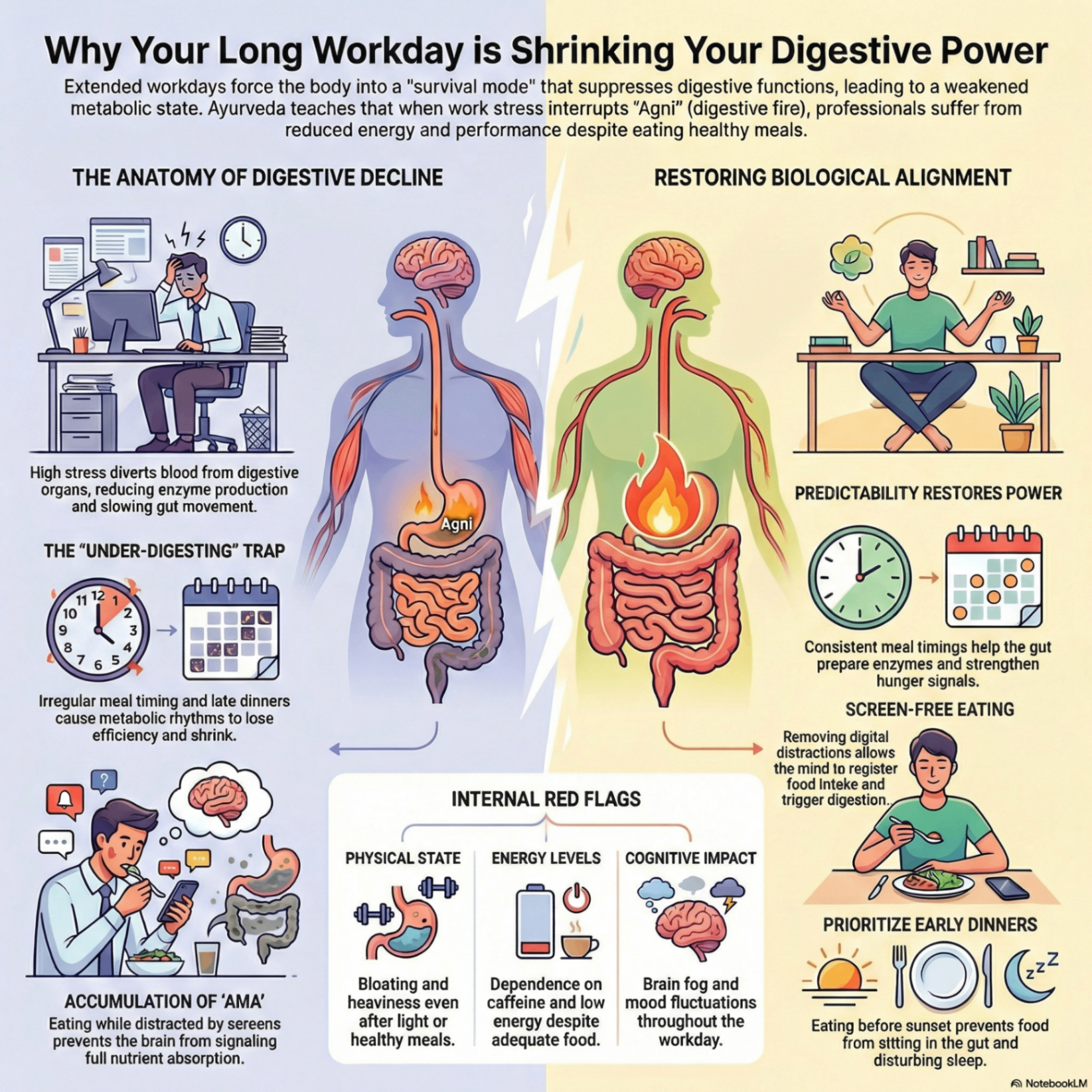
"Extended workdays force the body into a 'survival mode' that suppresses digestive functions, leading to a weakened metabolic state."
Understanding the Work-Stress Digestion Connection
When you're stressed at work—whether from deadlines, meetings, or screen fatigue—your body activates the sympathetic nervous system (the "fight or flight" response). This biological mechanism, designed to help our ancestors escape predators, now works against us in modern offices.
According to Ayurveda, this stress directly impacts Agni—your digestive fire. When work stress interrupts Agni, even healthy meals become difficult to process, leading to reduced energy and performance.
The Anatomy of Digestive Decline
Here's what happens inside your body during prolonged work stress:
🔴 Blood Flow Diversion
High stress diverts blood away from digestive organs to muscles and brain. This reduces enzyme production and slows gut movement, leading to incomplete digestion.
⏰ The "Under-Digesting" Trap
Irregular meal timing and late dinners—common among busy professionals—cause metabolic rhythms to lose efficiency. Your digestive system literally "shrinks" in capacity over time.
📱 Accumulation of 'Ama' (Toxins)
Eating while distracted by screens prevents the brain from signaling full nutrient absorption. Ayurveda calls the resulting metabolic waste "Ama"—a root cause of many health issues.
Internal Red Flags: Signs Your Digestion is Suffering
Watch for these warning signs that indicate work stress is affecting your gut:
Physical State
Bloating and heaviness even after light or healthy meals
Energy Levels
Dependence on caffeine and low energy despite adequate food
Cognitive Impact
Brain fog and mood fluctuations throughout the workday
Restoring Biological Alignment: Evidence-Based Solutions
The good news? Your digestive system can recover. Here are four Ayurvedic strategies backed by modern science:
1. Predictability Restores Power
Consistent meal timings help the gut prepare digestive enzymes and strengthen hunger signals. A 2023 study in the Journal of Clinical Gastroenterology found that regular meal timing improved digestive enzyme secretion by 34%.
Action: Set 3 fixed meal times and stick to them ±30 minutes daily.
2. Screen-Free Eating
Removing digital distractions during meals allows the mind to register food intake and trigger proper digestion. Research shows distracted eating reduces satiety hormones by up to 25%.
Action: Create a "no phone zone" during meals. Even 10 minutes of mindful eating makes a difference.
3. Prioritize Early Dinners
Eating before sunset (or at least 3 hours before sleep) prevents food from sitting in the gut and disturbing sleep. Ayurveda considers dinner timing crucial for maintaining strong Agni.
Action: Aim to finish dinner by 7-8 PM. If working late, have a light dinner rather than a heavy one.
4. Activate Rest-and-Digest Mode
Take 5 deep breaths before meals to shift from sympathetic (stress) to parasympathetic (rest-and-digest) nervous system. This simple practice can increase digestive enzyme production significantly.
Action: Practice 5-5-5 breathing: inhale 5 seconds, hold 5 seconds, exhale 5 seconds—before every meal.
The Role of Ayurvedic Herbs in Restoring Agni
While lifestyle changes form the foundation, traditional Ayurvedic herbs can accelerate digestive restoration. These herbs have been used for over 5,000 years to strengthen Agni:
🫚 Ginger (Shunti)
Increases digestive fire, reduces bloating, and stimulates gastric motility. Studies show ginger accelerates gastric emptying by 25%.
🌿 Triphala
A blend of three fruits that gently cleanses the digestive tract, removes Ama, and restores healthy bowel function.
🌱 Cumin (Jeera)
Stimulates enzyme secretion and aids nutrient absorption. Research confirms cumin increases digestive enzyme activity by up to 30%.
🌾 Fennel (Saunf)
Soothes the digestive tract, reduces gas, and prevents bloating. Traditionally chewed after meals in India.
RootWell: Your Daily Digestive Ally
RootWell combines 7 powerful Ayurvedic ingredients—Triphala, Ginger, Cumin, Fennel, Coriander, Amla, and Haritaki—in one convenient formula. Just mix 1 teaspoon in warm water twice daily to support your digestive health naturally.
A 7-Day Reset Plan for Busy Professionals
Start with this simple weekly plan to restore your digestive power:
| Day | Morning | Meals | Evening |
|---|---|---|---|
| Day 1-2 | Warm water + RootWell on empty stomach | Set fixed meal times | Light dinner by 8 PM |
| Day 3-4 | Add 5-5-5 breathing before meals | Screen-free lunch | RootWell before bed |
| Day 5-7 | Continue routine | All meals screen-free | Dinner by 7:30 PM |
The Bottom Line
Your long workday doesn't have to destroy your digestion. By understanding the stress-digestion connection and implementing simple Ayurvedic practices, you can restore your Agni and reclaim your energy. The key is consistency over perfection—small daily habits compound into significant health improvements.
Key Takeaways:
- ✓ Work stress activates "survival mode" that suppresses digestion
- ✓ Irregular meals, screen-eating, and late dinners worsen digestive decline
- ✓ Fixed meal times, mindful eating, and early dinners restore Agni
- ✓ Ayurvedic herbs like Ginger, Triphala, and Cumin support digestive recovery
- ✓ Start with small changes—consistency matters more than perfection
Remember: Your gut is your "second brain." When you heal your digestion, you don't just improve your physical health—you enhance your mental clarity, energy levels, and overall quality of life. Start your journey to better digestive health today.
Sources & Further Reading
- Ministry of AYUSH, Government of India
- NIH NCCIH — Ayurvedic Medicine: In Depth
- PubMed — Peer-reviewed research on Ayurveda & digestion
- World Health Organization — Traditional Medicine
Medical disclaimer: This article is written by Muskan Kumari and reviewed on 16 Oct 2026. It is based on classical Ayurvedic texts, lived personal experience, and publicly available research — and is for educational purposes only. It is not a substitute for professional medical advice, diagnosis, or treatment. Always consult a qualified healthcare practitioner for medical conditions, especially if you are pregnant, nursing, or on prescription medication.