Bhagalpur Silk Saree: Complete 2026 Guide to Bihar's Silk City Heritage (Price, Purity, Where to Buy)
Founder, RootWell · Lost 20kg with Ayurveda · 5+ yrs in traditional digestive wellness, trained under family practitioners in Bihar.
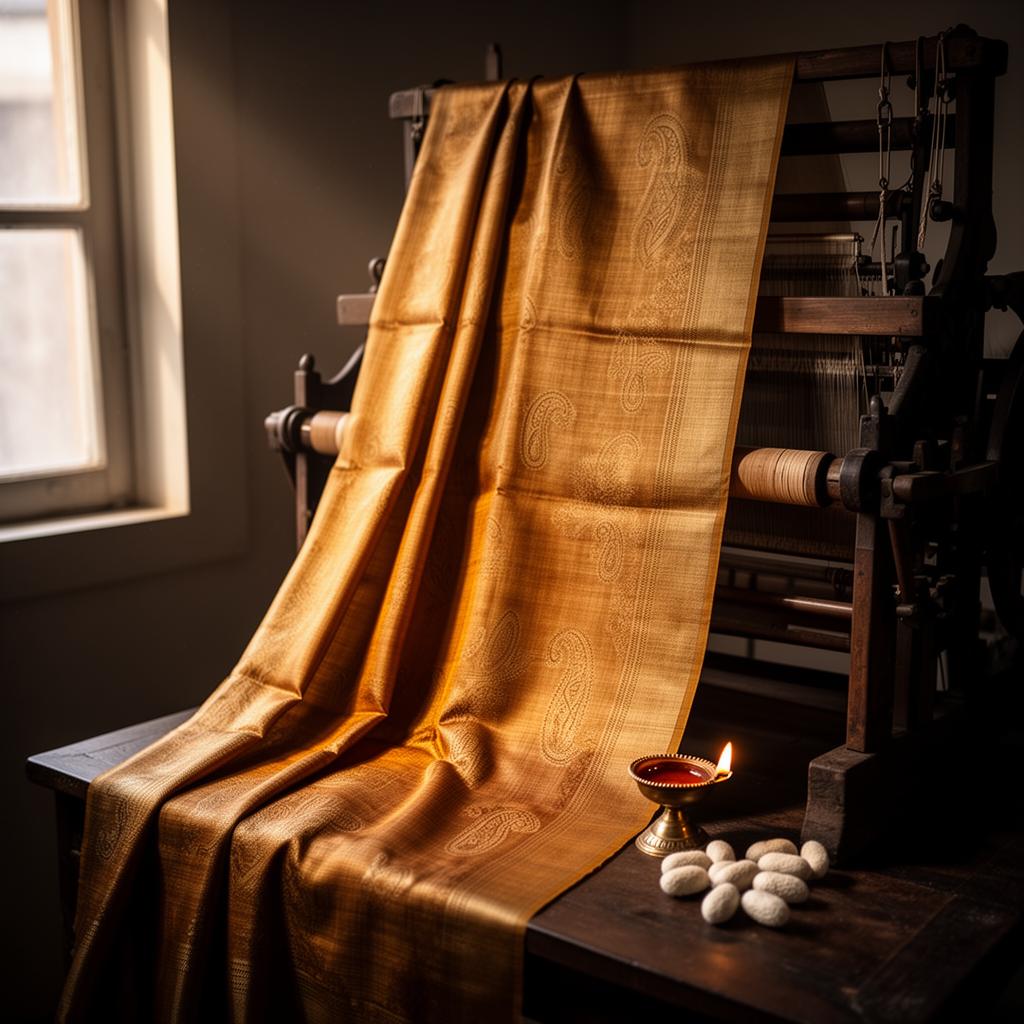
Bhagalpur — the eastern Bihar district on the southern bank of the Ganga — has been called the "Silk City of India" for almost 200 years. Long before Banaras became a brand and Kanchipuram became a wedding necessity, Bhagalpur was already exporting tussar silk spun from the cocoons of the wild Antheraea mylitta moth to royal courts across Asia. This is the honest, founder's-eye guide to what Bhagalpur silk really is, how to tell pure handloom from cheap power-loom imitations, what it should cost in 2026, and which weaver clusters still keep the loom running.
The 30-second answer
Bhagalpur silk (also called Bhagalpuri silk or Bhagalpuri tussar) is a handwoven silk fabric from Bhagalpur district, Bihar, traditionally made from tussar — a wild silk with a natural golden-honey tone, irregular slubs, and a soft matte sheen. The craft is GI-tagged (Bihar's first textile GI), uses cocoons reared in the forests of Jharkhand and Chhattisgarh, and is spun and woven by an estimated 30,000+ weaver households across the Champa, Nathnagar and Sultanganj clusters. Authentic handloom sarees range from ₹2,500 (entry) to ₹15,000+ (pure heavy tussar).
Why Bhagalpur Is Called the "Silk City"
Bhagalpur sits on the southern bank of the Ganga in eastern Bihar, with a climate and humidity that historically suited silk reeling. Records from the East India Company (1781) and the Imperial Gazetteer of India (1909) describe Bhagalpur as already exporting "Bhagalpuri tasar" to Calcutta, Burma, Persia and Europe — long before mechanised silk arrived in India.
The craft survived three things that killed many other Indian silk traditions: the collapse of Mughal patronage, the British cotton import wave, and partition. Today the city has roughly 30,000–35,000 looms spread across the Champa, Nathnagar, Sultanganj and Champanagar belts — making it the largest silk weaving cluster in eastern India.
The Four Bhagalpur Silks (Most People Confuse These)
When a shop says "Bhagalpur silk", they could mean any of four very different fabrics. Knowing the difference is the single biggest protection against overpaying:
- Pure Tussar (Kosa) Silk — the original, made from wild Antheraea mylitta cocoons. Natural golden-beige tone, slightly coarse, irregular slubs, breathable in summer. Most expensive. ₹6,000–15,000+ for a saree.
- Mulberry Silk (Bhagalpur weave) — same fine-grade mulberry silk you find in South India, but woven on Bhagalpur looms. Smoother, glossier, deeper colours. ₹5,000–12,000.
- Bhagalpuri Katia / Ghicha — made from broken or pierced cocoons (after the moth has emerged). Textured, matte, ahimsa-friendly. ₹3,000–6,000.
- "Bhagalpuri" Art Silk / Power-loom — synthetic polyester or viscose mill-fabric printed with "Bhagalpuri" designs. NOT real Bhagalpur silk. Sold on IndiaMart, Meesho, Amazon at ₹500–1,500. This is what 80% of "Bhagalpuri saree" buyers unknowingly end up with.
What "GI Tag" Means for Bhagalpur Silk
Bhagalpur Silk was awarded India's Geographical Indication tag in 2013 (GI Application No. 217), making it the first textile from Bihar to receive GI protection — almost a decade before Mithila Makhana (2022) and the recently-added Bawan Buti saree (June 2026).
In plain English: legally, only silk genuinely woven within the registered Bhagalpur weaver cluster (covering parts of Bhagalpur and Banka districts) can be sold as "Bhagalpur Silk". The tag is administered under the Geographical Indications of Goods (Registration and Protection) Act, 1999 by the Controller General of Patents, Designs & Trademarks. Enforcement is weak — but for an informed buyer, GI provenance is real proof of origin.
How to Spot Pure Bhagalpur Tussar (7 Honest Tests)
No shop will admit they are selling power-loom polyester as "Bhagalpuri silk". Use these 7 tests instead — they are what my mother taught me and what every Bhagalpur weaver will verify:
- The burn test (most reliable) — pull one thread from the saree's edge, burn it. Pure silk smells like burnt hair and leaves a brittle black ash you can crush. Polyester smells chemical, melts into a hard plastic bead.
- Look for irregular slubs — pure tussar has uneven thickness and small knots throughout. Power-loom is machine-perfect, uniform, lifeless.
- Natural golden-honey base — undyed pure tussar is never bright white. It has a warm gold-beige tone from the wild cocoon itself.
- Cool to touch, warm in hand — pure silk feels initially cool against the skin, then quickly warms up. Synthetic stays the same temperature.
- Friction test — rub two layers between your palms briskly. Pure silk gives a faint warmth and a soft "rasp" sound. Polyester is silent and stays cold.
- Selvedge weight — flip the saree and check the border edges. Handloom has slightly thicker, hand-finished selvedge with visible thread terminations. Power-loom is razor-clean.
- Ask for the Silk Mark — the Silk Mark of India (issued by Central Silk Board, Ministry of Textiles) is a small hologram tag attached to genuine silk. Not every authentic Bhagalpur weaver has one, but its presence is strong proof.
Bhagalpur Silk Price Guide 2026 (Honest Ranges)
Prices are from my own market survey across Bhagalpuritextile.in, Amounee, Avishya, Nalli, Taneira, Bhashabharat and direct weaver visits to Champanagar (June 2026). If a "pure Bhagalpur silk saree" is being sold below ₹2,000, it is almost certainly not pure.
| Category | Price Range | What You Get |
|---|---|---|
| Entry Tussar (light, single colour) | ₹2,500 – ₹4,500 | Plain undyed or single-shade, light weight, daily wear |
| Mid Tussar (handwoven, motifs) | ₹4,500 – ₹8,000 | Block print or simple buti, festive wear |
| Premium Handloom Tussar | ₹8,000 – ₹15,000 | Heavy weave, contrast pallu, weaver-signed |
| Luxury / Bridal Tussar Silk | ₹15,000 – ₹40,000+ | Pure mulberry-tussar blend, zari work, made-to-order |
| ⚠️ "Bhagalpuri" Art Silk | ₹500 – ₹1,500 | Power-loom synthetic. Avoid. |
The Weaver Clusters Behind the Loom
If you ever visit Bhagalpur, four neighbourhoods carry almost the entire silk weight of the city:
- Champanagar — the historic heart, where the oldest weaver families still operate pit-looms passed down four generations.
- Nathnagar — known for finer tussar and dyeing units; many cooperatives are based here.
- Sultanganj — strong in plain tussar and katia ghicha; quieter prices.
- Champa — concentration of the city's wholesale silk traders; not where weavers live, but where most retail flows through.
The Bihar State Khadi & Village Industries Board and the Office of the Development Commissioner (Handlooms) run cluster development schemes here under the National Handloom Development Programme. Most weavers, however, still earn between ₹300–500 per day — which is why buying directly (or from genuine handloom platforms) matters more than the brand on the label.
How to Care for a Bhagalpur Silk Saree
- Never machine wash. Pure tussar should be dry-cleaned only for the first 2–3 cleans. After that, gentle cold hand wash with a mild silk-safe soap (Ezee or Genteel) is fine.
- Dry in shade. Direct Indian sun fades natural tussar within a single afternoon.
- Store wrapped in muslin cotton — never plastic. Add a few neem leaves or dried turmeric pieces to keep silverfish out.
- Iron on the reverse side at low heat, ideally over a thin cotton cloth.
- Refold every 3 months along a different crease line to prevent permanent fold-tears on heavy zari pieces.
Where to Buy Authentic Bhagalpur Silk (2026)
Listed in order of trust, not price:
- Direct weaver visit, Champanagar, Bhagalpur — the best prices, the most honest fabric, the slowest process. Bring cash.
- Government emporiums — Bihar Khadi Bhandar (Patna, Delhi Connaught Place), Cottage Emporium (Janpath, Delhi), Handloom Haat (INA, Delhi). GI-verified.
- indiahandmade.com — official portal of the Office of the Development Commissioner (Handicrafts), Govt. of India. Carries Silk Mark certified Bhagalpur tussar.
- Bhagalpuritextile.in — direct from a Bhagalpur-based weaver cooperative. Reasonable mid-range pricing.
- Amounee, Avishya, The Thread Weavers — curated artisan platforms, higher prices but Silk Mark verified.
- Taneira (Tata) and Nalli — premium retail, guaranteed pure silk, but you pay 30–50% retail markup.
Avoid: IndiaMart and Meesho listings under ₹2,000, Amazon "Bhagalpuri" art-silk sarees without Silk Mark, and any "imitation Bhagalpuri" tag (this is the seller telling you it is fake).
Why This Matters for Bihar (And Why I'm Writing This)
I grew up watching my grandmother fold tussar sarees into steel trunks — golden-beige, slightly rough, smelling faintly of camphor. For decades, the weavers of Champanagar have quietly kept the loom running while the rest of India shifted to mill cloth. The reason most Bihari women I know own a Bhagalpuri is because it was always the most affordable real silk — gifted at weddings, festivals, and rituals.
Today the cluster is fighting two enemies: cheap Surat power-loom polyester sold under the "Bhagalpuri" name, and the slow disappearance of younger weavers (the new generation prefers Bangalore tech jobs to ₹400/day at the loom). The single most useful thing an Indian buyer can do is buy once, real, and from the right source — even if it costs three times more than the synthetic version.
RootWell's honest disclosure
RootWell does not sell Bhagalpur silk sarees. We are a food and wellness brand from Bihar. This guide exists because Bhagalpur silk is part of the same Bihari heritage as Mithila makhana, chana sattu and Bawan Buti, and because most "Bhagalpuri silk" sold online is not actually Bhagalpur silk. If you want to support our food work, our products are on root-well.com. For sarees, we point you to the weavers themselves.
Frequently Asked Questions
Is Bhagalpur silk the same as tussar silk?
Mostly yes. Tussar (or kosa) is the type of silk fibre, Bhagalpur is the place it is traditionally woven. So "Bhagalpur tussar silk" is the most accurate name. Bhagalpur weavers also work with mulberry and katia silk, but tussar is what made the city famous.
What is the price of a pure Bhagalpur silk saree in 2026?
A genuine handwoven Bhagalpur tussar starts at around ₹2,500 for a basic plain piece and goes up to ₹15,000+ for heavy weave with contrast pallu. Premium bridal pieces with zari can cross ₹40,000. Anything sold below ₹2,000 as "pure silk" is almost certainly synthetic.
Does Bhagalpur silk have a GI tag?
Yes. Bhagalpur Silk received India's Geographical Indication tag in 2013 (GI Application No. 217), making it the first textile GI from Bihar. Only silk woven within the registered Bhagalpur–Banka cluster can legally use the name.
How do I tell pure Bhagalpur silk from fake "Bhagalpuri" art silk?
Three quickest tests: (1) burn a thread — pure silk smells like burnt hair and leaves crushable ash; polyester melts into a plastic bead; (2) look for irregular slubs and natural honey-gold tone; (3) ask to see the Silk Mark of India hologram tag issued by the Central Silk Board.
Why is Bhagalpur called the Silk City?
Bhagalpur has been a silk weaving hub for nearly 200 years, documented in East India Company records from 1781 and the Imperial Gazetteer (1909). With roughly 30,000+ active looms across Champanagar, Nathnagar, Sultanganj and Champa, it remains the largest silk weaving cluster in eastern India.
Can I wash Bhagalpur silk at home?
Only after the first 2–3 dry-cleans. After that, cold hand wash with a silk-safe mild detergent (Ezee, Genteel) is fine. Never machine wash. Always dry in shade — direct sun fades natural tussar within hours.
Where is the best place to buy authentic Bhagalpur silk online?
For verified handloom: indiahandmade.com (Govt. of India portal), bhagalpuritextile.in (Bhagalpur cooperative direct), Amounee and Avishya (curated, Silk Mark verified). For premium: Taneira and Nalli. Avoid IndiaMart, Meesho and unbranded Amazon listings under ₹2,000.
Is Bhagalpur silk suitable for summer?
Yes — pure tussar is one of the most breathable silks in India. The wild silk fibre has natural air pockets that keep the body cooler than mulberry silk or polyester blends. Bihar's own 40°C summers are exactly the climate it evolved for.
Sources & Citations
- Geographical Indications Registry, India — Bhagalpur Silk GI Application No. 217 (2013)
- Central Silk Board, Ministry of Textiles, Government of India — Silk Mark Scheme
- Office of the Development Commissioner (Handlooms), Government of India — National Handloom Development Programme
- Imperial Gazetteer of India, Vol. VIII (1909) — Bhagalpur Silk Trade
- Government of Bihar — Department of Industries, Handloom & Textiles
- indiahandmade.com — Bhagalpur Tussar Catalogue, 2026
Sources & Further Reading
- Ministry of AYUSH, Government of India
- NIH NCCIH — Ayurvedic Medicine: In Depth
- PubMed — Peer-reviewed research on Ayurveda & digestion
- World Health Organization — Traditional Medicine
Medical disclaimer: This article is written by Muskan Kumari and reviewed on 1 Oct 2026. It is based on classical Ayurvedic texts, lived personal experience, and publicly available research — and is for educational purposes only. It is not a substitute for professional medical advice, diagnosis, or treatment. Always consult a qualified healthcare practitioner for medical conditions, especially if you are pregnant, nursing, or on prescription medication.